
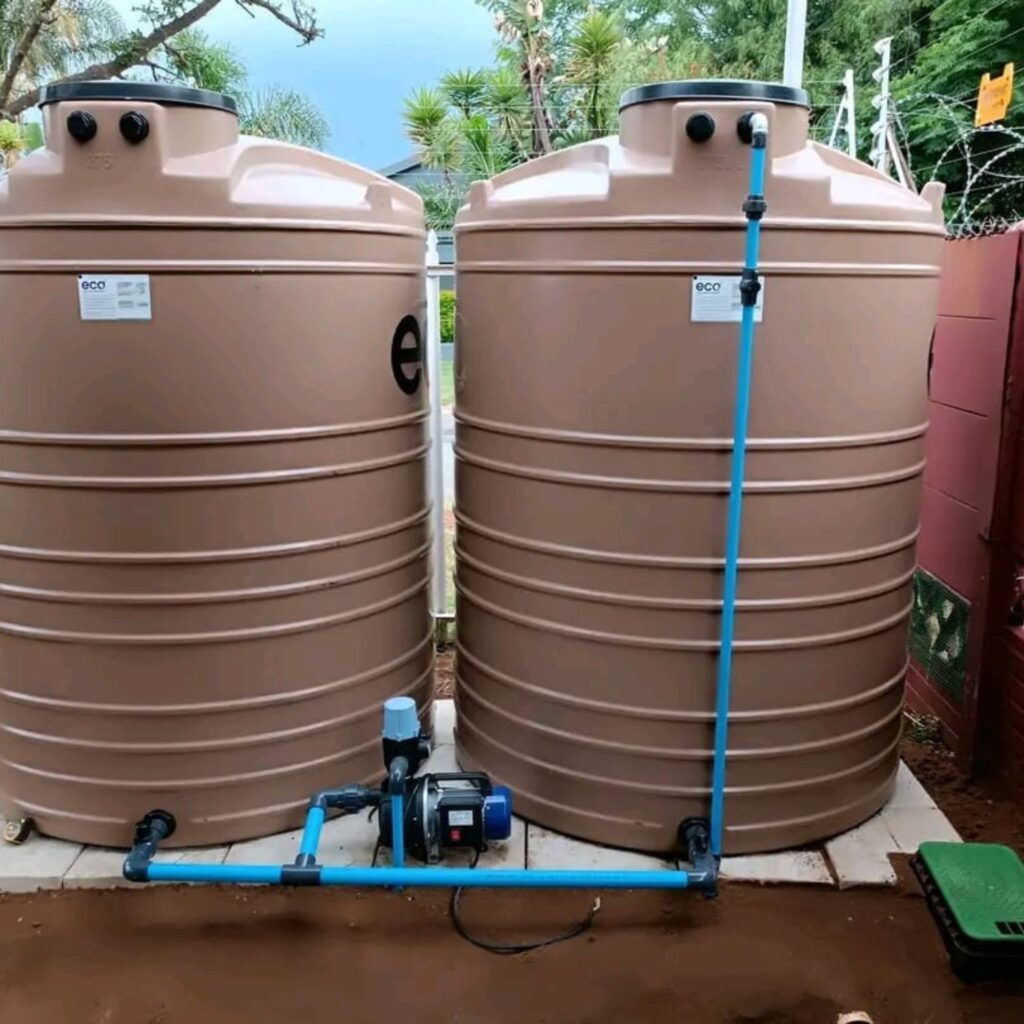
Taps Going Dry: Why a Water Backup System is Johannesburg’s New Essential
Not long ago, the idea of keeping a massive tank of water in a suburban Johannesburg backyard felt like overkill, something reserved for off grid plots or deep rural areas.
But things have changed. Much like load shedding forced us to rethink how we power our homes with inverters and solar panels, watershedding and unpredictable supply cuts have fundamentally shifted how Joburgers view water security.
If you are living in Gauteng, relying solely on the municipal grid has become a massive gamble. Here is why a home water backup system is no longer a luxury, but an absolute necessity for your home or business.
1. The Reality of Watershedding and Aging Infrastructure
Johannesburg’s water infrastructure is under severe stress. A combination of rapid urban population growth, historical maintenance backlogs, and aging pipes means that infrastructure failures are a daily reality.
When a major pipeline bursts or a pump station fails, it does not just take a couple of hours to fix. Entire suburbs frequently face dry taps for days at a time. A professional backup system acts as a buffer, automatically keeping your life running seamlessly while technicians work on the grid.
2. The Ripple Effect of Power Cuts
Many residents do not realize how deeply interconnected our water and electricity systems are. Johannesburg is hilly, and moving water requires massive, power hungry municipal pumping stations to push water up into high level reservoirs.
When power dips or substations trip, those pumps shut down. Once the pumps stop, reservoirs drain rapidly. Even after power is restored, it can take days for the water network to fully repressurize.
3. Protecting Family Health and Hygiene
Living without electricity is inconvenient, but living without water is a health hazard. Basic daily tasks quickly become logistical nightmares:
- Flushing toilets
- Bathing and showering
- Cooking and washing dishes
- Running washing machines
An automated water backup system stores municipal water when it is flowing. The moment grid pressure drops, the system kicks in, routing clean, pressurized water directly into your plumbing. You can shower, cook, and clean without even realizing the neighborhood is dry.
4. Guarding Against Inconsistent Water Quality
Quantity is not the only issue, quality is becoming a major concern. After a prolonged outage or a major pipe repair, the water that first returns to your taps is often brown, filled with sediment, or heavily chlorinated.
Modern backup water solutions can be integrated with advanced filtration systems. These setups catch rust, dirt, and microorganisms before they reach your taps, ensuring that the water your family consumes is consistently clean and safe.
5. Protecting Your Property Value
In the current South African real estate climate, buyers are looking for resilience. Just as a solar system increases a home’s market appeal, a reliable water backup system adds immediate equity to your property. Buyers are willing to pay a premium for peace of mind, knowing they will not have to cart buckets of water during a crisis.
Storage Tip: Experts suggest calculating your storage needs based on roughly 150 to 250 liters of water per person per day. Aiming for at least a three day supply will comfortably ride out municipal delays.
Take Control of Your Water Security Today
Waiting for the next major crisis to hit always costs more in the long run. Investing in a water backup system is about taking control of your daily life, protecting your family, and building a self reliant home in the heart of Jozi.
Do not wait for the taps to run dry again. Let the team at Aqua Tech Engineering design a custom, seamless water storage solution tailored to your property.
Contact Aqua Tech Engineering Today
- Website: aquatechengineering.co.za
- Email: aquatechegineering82@gmail.com
- Phone: 072 480 2257 or +27 72 712 0026
Get in touch right now to secure your uninterrupted water supply.